Fichigan

Small Stream Trout fishing in Michigan

Archive for the category “Survival”

Small Tents and Good Sense

I’ve had a variety of large and small tents including my 61 Apache Chief Tent Camper, which is more of a tent on wheels than a camper. For regular tents I started off big – big enough to stand up in and plenty of floor space so I could move my sleeping bag to the middle in a good storm to avoid the puddles and lakes that would form in the low ground wherever that was. Placement of the tent, especially big “family” size tents is critical since there is not a level spot in all the woods or campgrounds in Michigan. Preparing for rain is an integral part of camping and this usually involves the tent, a plastic tarp, and a shovel. The tarp is self explanatory. The shovel is used to create a trench around the tent designed to carry the rainwater anywhere that is not under the tent.  It never actually works but it gives the camper something else to do that seems important and manlike.

I like big tents but I have never seen one that doesn’t take an engineering degree and three people to set up.  And a one-ton press to flatten it sufficiently to put back in the carrying case. They offer pretty good rain protection (with a plastic tarp) and having the big space inside also provides a false sense of security in bear country which is helpful for a good nights sleep.

I misrepresented myself here – I actually started off with a small tent – a pup tent. I think the name came from the fact that small dogs were the intended users. Back a very long time ago, my brothers and I acquired one of these, I don’t know how. It was a basic inverted V of canvas with a center pole running down the middle like a doghouse with no sides. It could fit two small boys or one hound.  I am trying to remember if the thing had a floor, but I suspect not. I do remember that setting it up was a four boy operation since someone had to hold the upright at each end while someone else attached the ropes to the stakes and pounded them in.  It was the fourth boy’s responsibility to direct the operation and be the General.

I am happy to report small tents have made some strides toward common sense and utility. Two years ago I decided to buy one for quick trips and one-nighters (and also if I wanted to pull my boat instead of the tent camper). I knew what to look for because Feral sold his J C Higgens tent camper to Jake and bought a small tent.  It looked easy to set up.  I bought a Eureka Tetragon 2, the same brand / different model as Feral.  I have used it a half dozen times and now I can set it up before Feral has found my cooler and knocked down half a beer. So that’s really fast.

If you want tent buying advice here is the one important tip to take from this post: Look for a shock-corded external pole system where the tent clips to the poles instead of the poles threading through a closed seam channel.  You can see what I mean from the picture. To set up you attach the poles to the corners and hold them together while you clip on the tent – very simple and fast.

The Tetragon 2 is considered a two man tent, and Feral has the four man version. If you divide the number of persons a tent is rated for by two you will get the actual number of people a tent will hold without someone complaining.  I love my two man one man tent. It’s too small for anything but sleeping, but it’s comfortable.  I lay some carpet samples down on the ground and set the tent up over them. The tent has a lot of screen so airflow is good (minimal condensation) and the rain fly works. No tarp required.

A Wasted (fish) Life

Natch with one for the skillet

I hate to release a trout I think won’t survive. In Michigan there are minimum size limits for various trout species and it seems like the aggressive undersize trout are the ones most likely to perish from unhooking and handling. Unfortunately, if you are caught with an undersize trout you could face a fine – maybe even lose your license. So there is the dilemma – let the trout go when you know he may die or take it home to eat and risk a fine.  This may be a case where a little common sense may improve the law – allow a single undersize fish in the creel. Trust the angler to make a judgment call about the condition of the fish.

Larger fish are usually pretty tough. I have caught trout with a patch over one eye and their left pectoral fin tied behind their back, so survival rate is pretty good after they hit about fifteen inches. It is the duty of these experienced fish to teach the young ones about the various lures and how to recognize a treble hook, but I suspect the tough economy has had a trickle down effect so and more and more little trout have to fend for themselves without the sage advice of their elders.  The scary hook jawed trout wearing eye patches may offer advice at the stream corner but if little trout are like little people, their mommas told them not to talk to strangers.

From what I have seen there are no shortage of little trout – at least on the streams I fish. That may have a lot to do with the good management of the resource, or, more likely, on the ability of nature to replenish itself in spite of man.

I fished a steam about fifteen years back that crossed a major highway straddled by farm country. It was small, maybe ten to twelve feet wide with some mix of bottom including gravel and some very sandy stretches.  When I stepped on the sand, bubbles of gas came up that stunk like nothing I can describe. I suspect it had something to do with chemical run off from farm land. I kept fishing and caught a few small trout but sure didn’t keep any. After about an hour I came to a sharp bend and at the head of the bend the water was channeled through a tight spot.  I tossed my lure in the backwater of the tight spot and saw the largest brown trout I’d ever seen on a small stream. He made a wake going for my lure then ducked into the deep hole in the bend. I went back once or twice hoping to see that fish again. I suspect that massive trout had a couple good stories and with the help of chemicals may have spoken proper English but I never got the chance to interview him.

Back to small trout badly hooked, and some clarification: Depending on the stream, I’d like the option to cook up the ones I think won’t make it. If they speak English and ask to be put back I’ll honor their wishes.

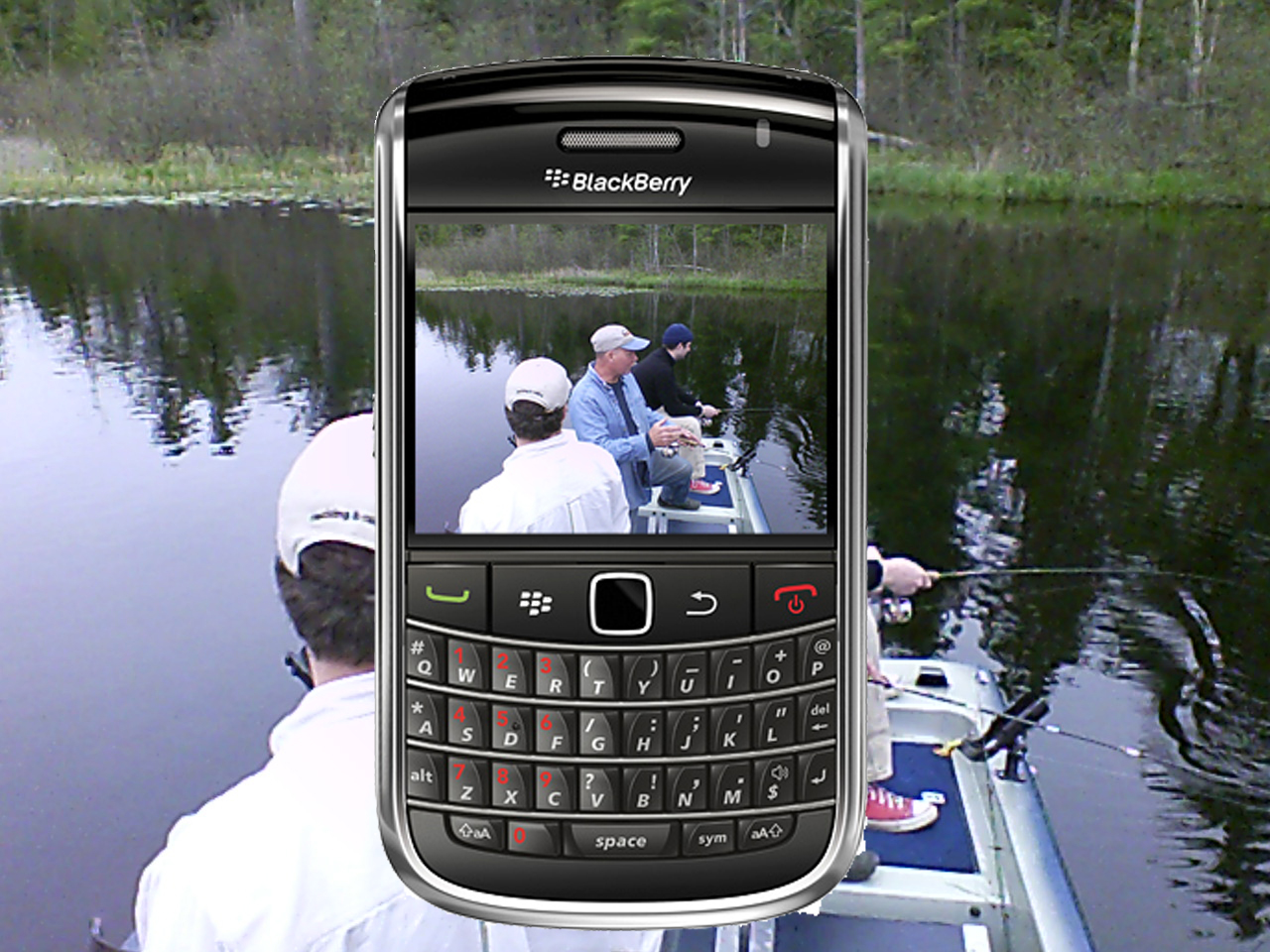
Four men in a boat, one wired.

Two flies land on a pile of dung and after a minute or so one farts. The other looks over and says, “Do you mind? I’m eating.” That jewel came from Natch, our wired fishing buddy. He pulled out his internet phone after hearing one of us tell a groaner.  We were trying to pass the time on a lake and it looked like we might revisit the catalog of jokes we have been repeating for twenty years. It’s amazing how useful it is being connected, especially when four guys are sharing a boat built for two and fishing a lake that appears to be poisoned off.

I don’t know if Natch placed any orders for tech stocks while we were whizzing treble hooks by his scalp, or whether he managed to call Rene and the boys, or if he checked his email to see how missed he was at work, but I can say for sure he was less bored and frustrated than those of us casting for the missing fish.

Natch rattled off a couple more funny jokes and for once I thought, maybe being wired full-time to the internet has its advantages. Then I thought no, that’s exactly what I’m trying to get away from. If I had a time machine I’d dial it back about 40 years, fill up my 67 Camero for ten bucks and drive up to the Pigeon River. I’d pick up Feral on the way. (Our spring trout camp included everything but trout.)

I sidetracked a bit. I was in a high rise office building this spring knocking on doors trying to drum up business.  I stepped into an elevator and a small group of professional thirty-somethings jumped in at the last second. As soon as the door closed the smart phones came out and they all started checking for messages.

It was almost funny.

Camp Stove Buyers Guide

Over the years I have had a couple camp stoves dating back to the old Coleman model whereby you pour gas into a tank and pump it up until your fingers hurt and then try to wash the gas smell off.  As an analog adventure that’s as real as it gets. For years at trout camp I would pretend to sleep in so Feral would have to get up first and light the dad-blamed thing.  Feral’s an analog guy and I mean that in every good sense of the word. If a gadget has any sort of historical relevance, ambiance, or coolness factor – it holds appeal for him like a moth to flame.

For a good example of this – see the post “Feral’s Instruments.” The post talks about his revolving line-up of stringed musical instruments but the lead photo shows a coffee pot atop a backpack camp stove, one of Feral’s revolving line-up of camp stoves. I don’t know who manufactures the stove in the photo but maybe he’ll weigh in with a comment.

For some reason, as campers, we took a decade long detour to restaurants rather than crank up a camp stove. Small town breakfast dives deserves it’s own post, but the point I want to make is we are going back to our “roots” whereby we are at least talking about cooking meals at camp (other than our tradition “Cajun trout and bake beans” final supper at the end of trout season).  That’s right, cooking breakfast in the morning instead of running into town like a bunch of tenderfeet.

Funny quick sideline – On a family camping trip with my late grandmother, Gladys Lucas, and my parents back in the nineties, my generation jumped into our cars one morning to head for a restaurant.  Grandma was up early and saw what we were doing. As we drove buy she shook her finger at us and yelled “You tenderfeet”.  So that’s where that came from.

Back to camp stove technology. Around ten years ago I found a propane stove that actually made sense in that it was simple, practical and cheap. The magic triad.  I am sorry to report that I cross threaded the propane canister on a trip last fall trip and watched it do a slow meltdown when the leaking propane ignited.  That said, I blame myself for not being more careful attaching the canister and still stand by the product. The design makes sense in that the canister doubles as a leg of the stove providing a solid base to hold even a large skillet. Clever stuff – maybe I have a little analog still in me.

I found the stove on Amazon and delivered price ran about twenty-five bucks and that includes shipping. I’m all set for spring trout camp. Here are the details including seller:

Brinkmann 842-0010-0 1-burner Propane Camp Stove
Sold by BSEK Tech Consultants Inc (GizmosForLife)
Condition: new $14.98   Item Subtotal: $14.98 Shipping & Handling: $10.35 Shipment Total: $25.33

My only qualification is: make sure you thread on the propane canister correctly. You will be amazed by the utility of this product. 

A Morel Dilemma

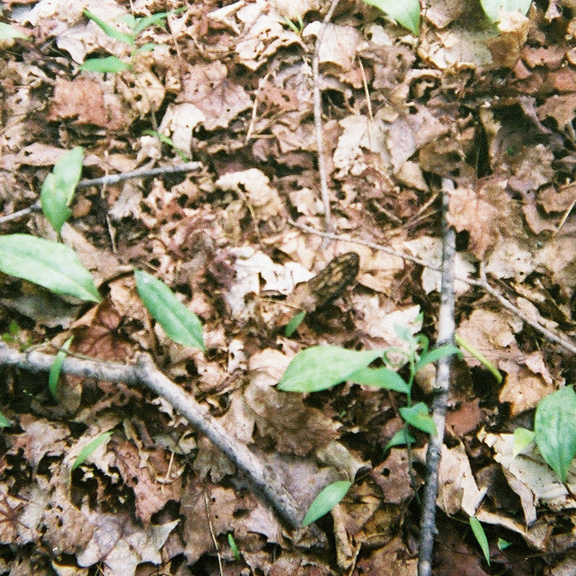
It’s January 6 and the temperature is almost fifty in Michigan. When I stepped outside I was transported to trout camp first by the warmth and then the earthy smell of spring. Reality checked my imagination but not my enthusiasm.  Spring brings the new trout season, and a backup pastime of Morel Mushroom hunting. Mushroom hunting finishes a close second.

We find the early black morels, and as the season progresses, the half-caps. We (Feral and myself) don’t have a spot for the later white morels but maybe that’s because we’re looking in the wrong place – we keep going back to the black morels areas. It’s vexing to think back to our grandpa opening the trunk of his 65 Chevy Impala and seeing two bushels of white morels. I don’t have a clue where he found the mother lode but it’s possible those days are gone, at least on public land. A good day for us is a few dozen two inch Black Morels to fry up with some trout. And that’s enough. We fry them in butter until they are about 25% of their original size and crispy. People compare the taste of morels to steak, but to me it’s more like eating bacon. Are we frying them too long? I’ve read you need to cook them thoroughly.

If you haven’t tried mushroom hunting here’s a good tip: Look for cars parked along the road in late April and early May. Most everyone expects to see other hunters so you will not be breaking any code. I have read books on morel mushroom habitat and what else I can add has very little value unless you are a naturalist with a degree in botany. Look near Elm and Ash trees, white barked trees like Birch, Poplar, and Aspen, and in evergreens like White Pine. Look where the sun is warming a hillside early in the season, and shaded hillsides late. Alongside water is good including drainage ditches along a road.

If you have never been mushrooming it’s wise to go with an expert the first time. It is encouraging to see someone else find some. If they help you spot some it will be much easier to gain some confidence – they are difficult to see, especially the black ones.  And the expert can cull your bag for the false morels, the poisonous variety that can wreck an otherwise nice meal.

The Incident at Tin Bridge

I was thinking back fondly on a strange incident at Tin Bridge on the Pigeon River in the Pigeon River State Game Area.  I had parked my 10 year old 91 Pathfinder at the bridge and fished a stretch upstream and when I returned to my vehicle I had to drive over the bridge, turnaround, and re-cross the bridge to head back to camp. At that time the bridge was in pretty rough shape with squared off logs laid sideways and apparently not firmly attached. You could hear a distinct thumping sound as you crossed but what was really happening down there was not clear. As I re-crossed the bridge the dull thump sound was replaced by my blasting exhaust.  A log had somehow knocked my muffler off – but that was small potatoes.  When I put on the brakes my foot went to the floor. I rolled to a stop and looked underneath. I could see a severed brake line with dripping fluid and the muffler hanging low. There was nothing I could do but glide back to camp. Fortunately it was all two-tracks and I didn’t meet anyone head-on.

Back at camp my buddies took turns surveying the underside and that’s where we first noticed the frame damage. The rear axle on a 91 Pathfinder has support members designed for stabilizing. One was definitely broken. The frame was fairly rusted out anyway so it was hard to gauge how much I can blame on the bridge. Still, this was serious. The frame needed work.

I started adding up the costs. We were out in the sticks and the closest town with any auto service was Gaylord, at least twenty miles away. It would be expensive to have the vehicle towed. The exhaust and brake line might run a couple hundred bucks. The frame was the wild card – I didn’t know if I could even get the frame fixed, or for what cost.

I fired up the Pathfinder the next morning and found that a car without exhaust is twice as noisy on a cold morning. Feral followed me in, wisely, since he didn’t want to provide brakes with the rear of his vehicle.  We took the old highway into Gaylord to avoid traffic. I used my parking brake lever to help stop – I can’t remember if I had a hint of brake left – that may have been the case. I think we pinched the severed line so the brake system held some pressure.

I rolled into a muffler shop near Main Street and they put it on the hoist. They did right by me – putting on a cheap muffler and fixing the brake line.  They also directed me to a place that might be able to fix the frame, a welding shop of some kind. As I recall, they were closed.  It was Saturday.

Meanwhile I had to formulate a back-up plan: just in case. I could scrap the vehicle or try to trade it in for something else providing a dealer would even take it. We did a little car browsing and I was feeling the pressure.  I really needed the frame fixed in order to avoid a “make-do” car buying experience.  Being at the mercy of a car salesman is low on my list of entertainment. I looked at a few older vehicles but didn’t see anything I would even want to consider.

On Monday Feral and I stopped at the suggested welding shop and explained the situation. The young fellow working there (alone) crawled under the Pathfinder and banged on the remaining rusted frame to see what he could find to work with.  He offered to weld some new pieces of steel onto the frame for $200. I jumped at it. He told us to come back at the end of the day. When we arrived later I could tell he spent more time than he planned but he was very professional about it. I looked underneath and could see he’d welded some new steel in place and listened as he explained the difficulty of making sure everything was aligned properly. By all accounts I had lucked on a perfectionist who took pride in his work. Bottom line: I was back in business for about $350 total car repair.

If nothing else, this is a true story about nice people in a small town helping out a guy with car problems. It could have been a disaster. I should mention the state has replaced the old bridge. The new one is an eye sore with heavy duty guard rails that belong on an expressway – not exactly what you want to see on a two-track out in God’s country… but I really shouldn’t complain. If anyone has a photo of the old bridge please send it to me and I’ll add it to this post. Thanks.

Quicksand in Michigan Streams

Everything I know about quicksand I learned from Tarzan movies. The main thing to know is: bad guys don’t make it out, but good guys and gals always do. If you’re a bad guy, please stop reading. Quicksand on a trout stream is a little different than sand bogs in Africa, but there’s some similarity. They are both camouflaged so you don’t see it until it’s too late and if you make it out alive you’ll have an interesting story to tell even if no one believes you.

Quicksand on a trout stream is harder to see since it’s underwater. The stream bottom appears normal except there is no visible hole (sand covers it) so you don’t know it’s here until you start sinking. In waders it’s pretty scary since swimming doesn’t feel like an option.

I’ve found quicksand on the Pine River in Lake County and the Sturgeon River in the Pigeon River State Game Area. On the Pine, the particular spot I know of is a few bends downstream from Raymond Road. The first time I ran into it I was alone. I scrambled to get out and it was like running in place up a sand dune. It was easy to see the exact spot afterwards because a cloud of light gray silt poured out like smoke.  An hour later, walking the bank downstream, the silt was still pouring out.

A couple years later I fished the same stretch with Feral Tweed and mentioned it to him right before we got there (it was hard to forget). I was in the lead and sure enough I stepped into it and the same thing happened. Here again, I didn’t see the hole – it looked just like the rest of the sandy stream bottom.  A film of sand over the hole made it invisible.

The Sturgeon River has at least one spot I know of in the section they call the Valley which is upstream of the notorious Ford property. The same thing happens, but without the silt pouring out. How dangerous it is I don’t know. You start sinking and your reactions take over. This spot is near the left bank (fishing upstream) opposite and below a couple giant evergreen trees that lean out over the water from right the bank. If the stream is low it’s easy enough to wade around (since I know the exact spot), but with high water I get out on the bank and get back in above it.

How prevalent and dangerous are these quicksand spots?  If you are careful wading, meaning testing each step which you should be doing anyway, then you will likely get off with a small adrenaline rush and some exercise. Best not count on Tarzan to rescue you. He’s busy.

Post Navigation